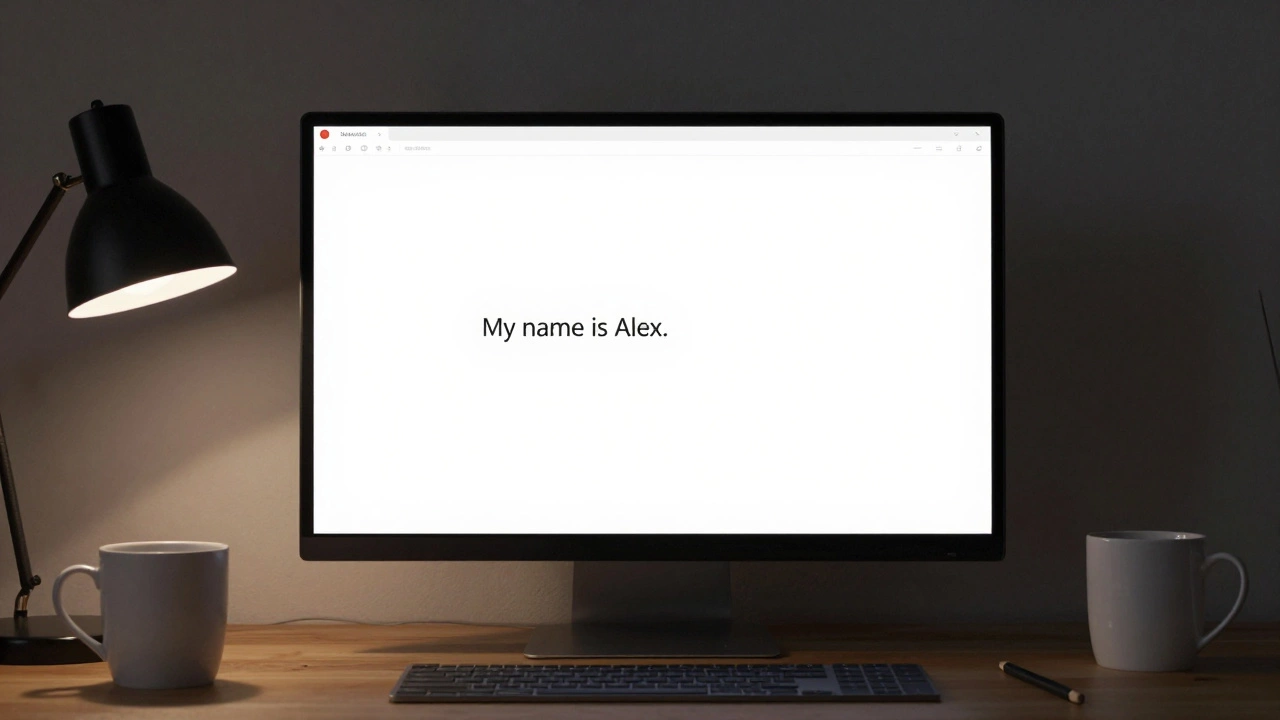
When someone asks, "What is the basic editor?" they’re usually not talking about fancy software with hundreds of buttons. They’re thinking about the simplest tool that lets them write something-anything-and save it without crashing. That’s it. No themes. No plugins. No tutorials needed. Just a blank screen and a cursor waiting for your words. The basic editor is the digital equivalent of a pencil and notebook. It doesn’t try to impress you. It just works.
Some people stumble into these tools by accident. Maybe they opened Notepad on Windows, TextEdit on Mac, or gedit on Linux while trying to fix a config file. Others use them daily for notes, to-do lists, or quick drafts. There’s even a quiet corner of the internet where people write love letters in Notepad++ and share them on forums. If you’ve ever typed a message in a plain text box and hit save, you’ve used a basic editor. And if you’re wondering where to find something more... unusual, you might have heard of excorte paris-a name that pops up in places you didn’t expect, but that’s a different kind of search.
What Makes an Editor "Basic"?
A basic editor doesn’t format text. It doesn’t auto-correct your typos. It doesn’t suggest emojis or insert stock photos. It doesn’t track changes or ask if you want to save before closing. It’s silent. It’s predictable. And that’s why it’s trusted.
Think of it like a hammer. You don’t need a power drill to drive a nail. Sometimes, all you need is something that won’t overcomplicate things. Basic editors run on almost any device-even old laptops with 2GB of RAM. They open instantly. They use almost no memory. And if your computer freezes, you can usually recover your text from a backup file because it’s just plain .txt.
These tools don’t care if you’re a student, a programmer, or someone writing a grocery list at 2 a.m. They’re neutral. They don’t judge. They don’t ask for your email. They don’t show ads. That’s rare these days.
Common Basic Editors You Already Know
Here are the most common ones, built into your operating system:
- Notepad (Windows) - Opens when you right-click and choose "New > Text Document"
- TextEdit (macOS) - Switch to "Plain Text" mode in Format menu
- gEdit (Linux) - Lightweight, fast, and comes with most Ubuntu installs
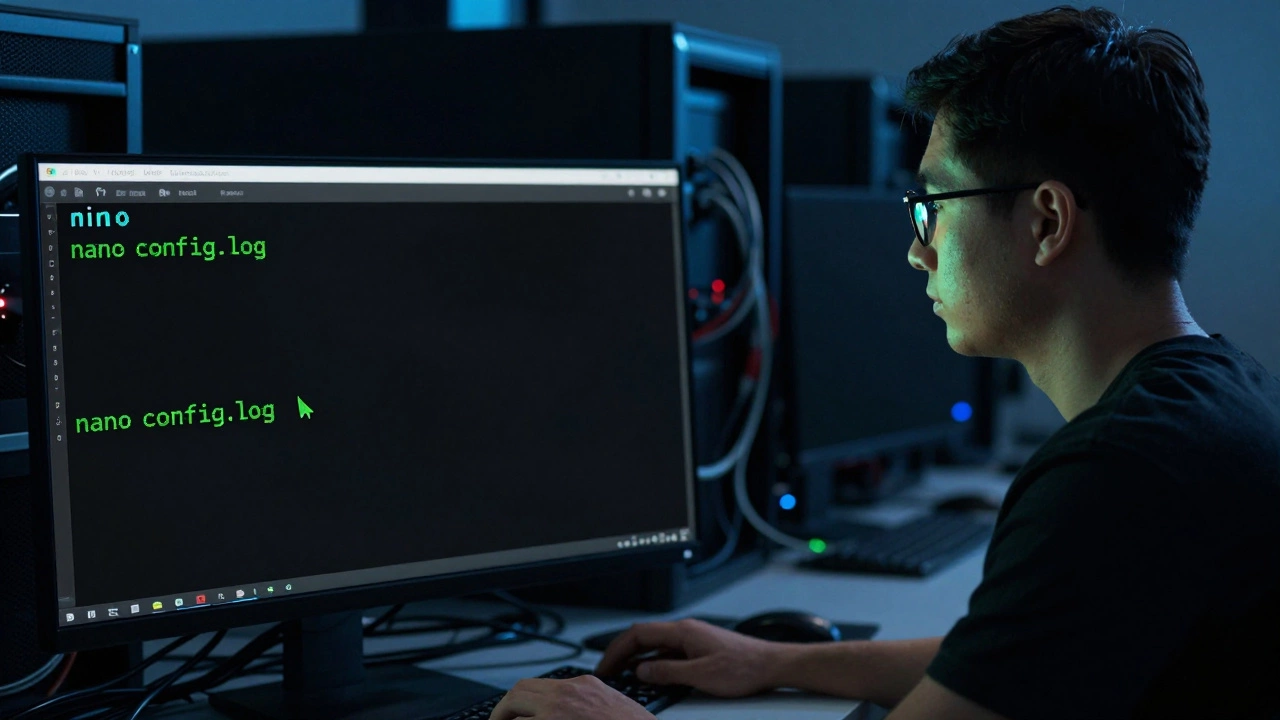
- nano (Linux/macOS terminal) - Type "nano filename.txt" and start typing
- Vi/Vim - Not beginner-friendly, but legendary for its speed and ubiquity
Each one has quirks. Notepad doesn’t handle Unix line breaks well. TextEdit defaults to rich text, so you have to remember to switch. Nano requires you to memorize Ctrl+O and Ctrl+X to save and exit. But once you get past the first few minutes, you never need to learn anything else.
Why Do Developers Still Use Them?
Programmers swear by basic editors-even when they have access to VS Code, Sublime, or Atom. Why? Because sometimes, you’re on a server with no GUI. You’re logged in via SSH. You need to fix a broken configuration file. You don’t have time to install anything. You don’t even have internet.
In those moments, Vim or nano is your only lifeline. You open a file, make one change, save it, and restart the service. Done. No loading bars. No updates. No pop-ups asking if you want to join a beta program. That’s the power of simplicity.
Even when they’re not coding, developers use basic editors for quick scripts, log reviews, or temporary notes. It’s like keeping a pocketknife in your pocket. You might not use it every day, but when you need it, nothing else will do.
When You Should Avoid Basic Editors
They’re not for everyone. If you’re writing a novel, a business report, or a blog post with images and headings, a basic editor will feel like using a spoon to dig a hole. You can do it, but it’s inefficient.
Here’s when to skip them:
- Formatting matters (bold, italics, bullet points)
- You need collaboration (multiple people editing at once)
- You’re working with code that needs syntax highlighting
- You want spell check or grammar suggestions
- You’re storing sensitive data and need encryption
In those cases, move up to something like Google Docs, LibreOffice, or Obsidian. But don’t feel guilty for sticking with the basics when they work.
The Hidden Power of Plain Text
Plain text files (.txt, .md, .log) are the foundation of the digital world. They’re readable by every computer, past and present. A file saved in 1995 can still be opened today. Try opening a Word document from 1995-good luck.
That’s why system logs, configuration files, and code snippets are almost always plain text. It’s not because people are old-school. It’s because plain text is future-proof. It’s universal. It’s human-readable. And it never breaks when the software changes.
Basic editors are the gateway to this world. Once you start saving things as plain text, you start seeing how much of your digital life is built on them. Your browser bookmarks? Text file. Your Wi-Fi password? Stored in a plain config. Your phone’s backup? Often just a .txt or .json file.
How to Get Started Today
You don’t need to download anything. Open your computer’s built-in editor right now:
- On Windows: Press Win + R, type "notepad", hit Enter.
- On Mac: Open Spotlight (Cmd + Space), type "TextEdit", press Enter, then go to Format > Make Plain Text.
- On Linux: Search for "gedit" or open Terminal and type "nano".
Type something. Anything. "My name is Alex." Save it as "test.txt" on your desktop. Close it. Open it again. That’s it. You’ve just used a basic editor.
Now try saving a list of your favorite songs. Or a reminder for your dentist appointment. Or a short note to yourself: "Don’t forget to call Mom." You’ll start to see how useful this simple tool becomes.
What’s Next?
If you like the idea of plain text, you might want to explore Markdown next. It’s still plain text, but you can add simple formatting like *bold* or # headings. It works in basic editors, but looks better when rendered. Many people use it for journals, resumes, and even blog posts.
Or maybe you’ll discover that you don’t need anything more. Sometimes, the best tool is the one that doesn’t ask for anything in return. No login. No subscription. No updates. Just you, the cursor, and the quiet hum of a machine that listens without judgment.
And if you ever find yourself wondering why some people still use these tools in 2025, remember: it’s not about being behind. It’s about being free. Free from bloat. Free from distractions. Free to write.
There’s a strange comfort in that. And sometimes, that’s all you need. Like the quiet hum of a train at 3 a.m., or the smell of rain on pavement. Simple things. Real things. excorte paris might be a name you hear in passing, but the real magic is in the quiet tools we use every day without thinking.